Inside the Technology Behind Bottle Sleeving Machine Systems
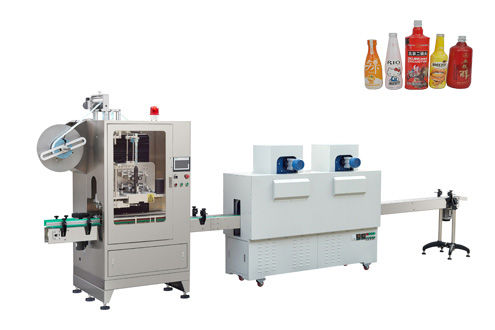
In modern packaging automation, bottle sleeving machine systems have become an essential part of high-speed production lines. These systems are widely used for applying shrink sleeve labels to containers with different shapes and materials, ensuring both product identification and visual consistency. Behind their stable performance lies a combination of mechanical engineering, control technology, and material handling design.
Understanding the core technology behind these systems helps explain how they achieve accuracy, speed, and adaptability in demanding industrial environments.
Precision Mechanical Structure Design
The foundation of a bottle sleeving machine system is its mechanical structure. Each component is designed to ensure smooth bottle transfer, stable positioning, and accurate sleeve placement.
Conveyors, guiding rails, and bottle separation units work together to maintain consistent spacing between containers. This stability is essential for ensuring that each bottle receives the sleeve at the correct position and timing during continuous operation.
A well-engineered structure reduces vibration and improves overall labeling consistency.
Intelligent Sensing and Detection Systems
Modern sleeving systems rely heavily on sensors to detect bottle position and trigger precise application timing. These sensors monitor the movement of bottles in real time and send signals to the control system.
Accurate detection ensures that sleeves are released at the correct moment, preventing misalignment or incomplete application. Advanced detection systems also help adjust to different bottle sizes and production speeds automatically.
Sensor accuracy plays a critical role in maintaining system reliability.
Synchronized Motion Control Technology
Synchronization is one of the most important aspects of bottle sleeving machine systems. Multiple components, including conveyors, feeding units, and cutting mechanisms, must operate in perfect coordination.
Motion control systems ensure that all mechanical actions occur at the correct time sequence. This reduces delays between detection and application, improving overall labeling precision.
Proper synchronization helps maintain stable output even at high production speeds.
Sleeve Feeding and Material Handling Mechanisms
Shrink sleeve materials must be handled with precision to avoid deformation or misalignment. The feeding system controls tension, alignment, and delivery speed to ensure smooth application.
Consistent material flow is essential for preventing stretching or folding before the shrinking process. Well-designed feeding mechanisms improve labeling quality and reduce waste.
Material stability directly affects final packaging appearance.
Cutting and Positioning Accuracy
Before sleeves are applied to bottles, they must be cut and positioned accurately. Cutting systems are designed to ensure uniform sleeve length and clean edges for smooth application.
Positioning mechanisms align each sleeve with the corresponding bottle, ensuring consistent placement across the production line. This stage is critical for maintaining uniform product presentation after heat shrinking.
Integration with Heat Shrinking Systems
After sleeve application, bottles pass through a heat shrinking process where the label conforms tightly to the container surface. The sleeving machine must therefore coordinate closely with shrinking equipment.
Proper integration ensures that sleeves are applied in a stable position before entering the heat tunnel, allowing consistent shrink results and improved label quality.
System coordination between these stages is essential for overall packaging performance.
Automation and Control System Architecture
At the core of bottle sleeving machine systems is an automated control system that manages all mechanical and electronic operations. This system processes sensor signals, coordinates motion timing, and adjusts operational parameters in real time.
Automation reduces manual intervention and ensures consistent production quality across long operating cycles. It also allows the system to adapt to different production requirements with minimal adjustment.
Operational Stability in High-Speed Production
As production speeds increase, maintaining stability becomes more challenging. The system must balance speed with precision to avoid misalignment or timing errors.
Advanced control logic and reinforced mechanical design help maintain consistent performance even under high-load conditions. Stability at high speed is a key indicator of system quality.
Future Development of Sleeving Technology
Future bottle sleeving machine systems are expected to integrate more intelligent control features, improved real-time monitoring, and adaptive synchronization technologies. These improvements will enhance accuracy and reduce operational fluctuations.
 ∷
∷