Shrink Sleeve Labeling Machine Performance in Varied Environments
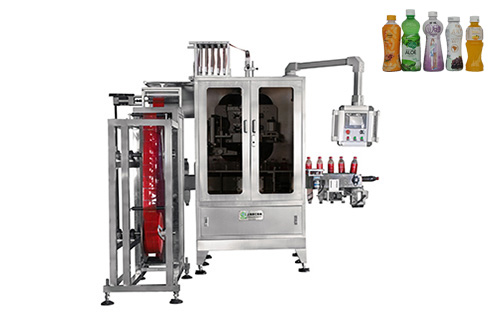
In global packaging operations from humid tropical warehouses to dry, climate-controlled production facilities the reliability of a shrink sleeve labeling machine for bottle can be significantly influenced by ambient temperature, humidity, and air quality. Yet few discussions address how these machines maintain consistent labeling quality despite such environmental variability. As brands expand into diverse markets and adopt flexible manufacturing models, this resilience is becoming a decisive factor in equipment selection.
The core challenge lies in the physics of shrink film itself. Most sleeve materials whether PETG, PVC, or bio-based alternatives are hygroscopic or thermally sensitive. In high-humidity environments, films can absorb moisture, leading to dimensional instability, wrinkling, or inconsistent shrink behavior. Conversely, in arid conditions, static electricity buildup may cause sleeves to cling to guides or misfeed during application. A robust shrink sleeve labeling machine for bottle must counteract these variables without constant manual intervention.
Modern systems address this through multi-layered environmental compensation. For example, integrated dehumidification or climate-buffered film storage compartments help stabilize material properties before feeding. Anti-static ionizing bars neutralize charges on both film and containers, ensuring smooth handling regardless of ambient dryness. Some machines even feature real-time humidity sensors that auto-adjust heater profiles in the shrink tunnel slightly increasing dwell time in moist conditions or reducing it in dry ones to maintain uniform conformation.
Thermal consistency is another critical aspect. Ambient temperature swings can affect motor performance, pneumatic response, and even electronic calibration. High-end shrink sleeve labeling machines now use closed-loop thermal management for key components, including servo drives and control panels, preventing drift in cut length or registration accuracy due to external heat or cold.
Moreover, material feed systems are increasingly designed with adaptive tension control that responds not just to film type but to environmental-induced changes in stiffness or elasticity. This ensures that a sleeve unwound in Singapore performs identically to one processed in Scandinavia.
For multinational brands or contract packers operating across regions, this environmental adaptability translates into operational continuity. There’s no need to requalify entire lines when moving production or launching local co-packing partnerships. The machine “self-corrects” within its operating envelope, preserving brand-standard labeling quality worldwide.
Additionally, remote diagnostics and cloud-based performance logging allow technicians to monitor environmental impact trends over time identifying patterns like seasonal slowdowns or recurring misfeeds and proactively adjust parameters before issues escalate.
As supply chains grow more distributed and sustainability demands push production closer to end markets, the ability of a shrink sleeve labeling machine for bottle to perform reliably under varying climates is no longer a technical footnote it’s a strategic necessity. In this context, resilience isn’t just about durability; it’s about delivering pixel-perfect, tamper-evident, full-body labels rain or shine, summer or winter, anywhere in the world.
 ∷
∷