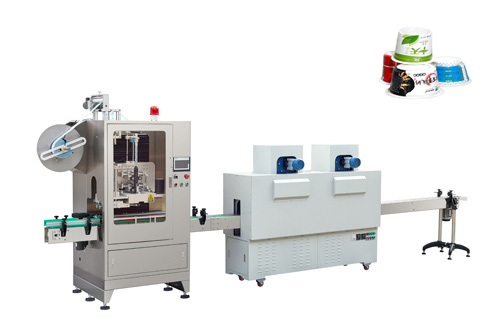
Customization steps for Shrink Sleeve Labeler Factory
In modern packaging automation, customization has become a critical requirement for manufacturers operating across diverse product categories. Shrink sleeve labeling systems are no longer treated as one-size-fits-all equipment. Instead, they are developed and adjusted based on specific production needs, container characteristics, and line integration requirements. Understanding the customization steps inside a shrink sleeve labeler factory helps explain how these systems are adapted for different industrial applications.
Requirement Analysis and Application Definition The customization process begins with a detailed evaluation of production requirements. Factors such as container shape, material type, labeling position, production speed, and environmental conditions are carefully considered. This stage ensures that the equipment design aligns with real operational conditions rather than generic assumptions, forming the foundation for a stable and efficient labeling system.
System Configuration Planning Once application requirements are defined, the next step involves determining the system structure. A shrink sleeve labeling system typically includes multiple functional modules such as bottle feeding, sleeve cutting, label positioning, and shrinking coordination. Each module must be configured to match the intended production capacity and workflow. Proper system planning helps ensure smooth integration between mechanical and control components.
Mechanical Design Adaptation Mechanical customization focuses on adjusting the structure of the equipment to accommodate different bottle dimensions and packaging formats. This may involve modifications to guiding systems, conveyor alignment, or sleeve application positioning. Precision in mechanical design is essential to maintain stable operation during continuous production and to ensure consistent label placement across different product types.
Control System Programming and Adjustment Modern shrink sleeve labeling systems rely heavily on automated control systems. During customization, control logic is adjusted to match production speed, timing synchronization, and operational sequencing. Sensor integration and motion coordination are configured to ensure accurate detection and precise sleeve application. This stage plays a key role in achieving stable and repeatable performance.
Material Handling Optimization Different sleeve materials behave differently during feeding, cutting, and application. Customization includes optimizing tension control, feeding speed, and alignment accuracy to ensure smooth material flow. Proper handling reduces the risk of misalignment, deformation, or inconsistent sleeve positioning during high-speed operation.
Trial Testing and Performance Calibration After system configuration is completed, trial operation is conducted to evaluate performance under real production conditions. This stage helps identify any inconsistencies in timing, alignment, or mechanical coordination. Adjustments are made based on test results to improve system stability and ensure that all components operate in harmony during continuous production.
Integration with Packaging Lines Shrink sleeve labeler systems must operate as part of a larger packaging line that includes filling, capping, conveying, and heat shrinking processes. Customization ensures that timing and speed are properly synchronized with upstream and downstream equipment. Effective integration reduces production interruptions and improves overall system efficiency.
Final Optimization and Stability Verification The final stage of customization focuses on long-term operational stability. Continuous running tests are conducted to confirm that the system maintains consistent performance over extended periods. This ensures that the equipment is ready for industrial use with minimal variation in output quality.