Welcome: Shanghai Suren Machinery Manufacturing Co., Ltd.
Language: Chinese ∷  English

Industry new

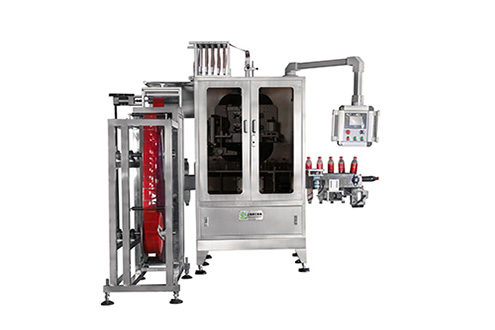
Key Factors When Selecting a Sleeve Labeler

As packaging automation continues to expand across global manufacturing industries, sleeve labeling has become a widely adopted solution for achieving full-body container decoration and enhanced product presentation. Sleeve labelers are now commonly used in beverage, food, personal care, and household product packaging lines where visual impact and labeling flexibility are increasingly important.
However, selecting the right sleeve labeler requires more than simply matching equipment to a production line. It involves evaluating multiple operational, technical, and long-term performance factors that directly influence packaging efficiency and product quality.

Understanding Production and Application Needs
The first step in selecting a sleeve labeler is clearly defining the production environment and application requirements. Different industries operate under varying conditions, including production speed, container diversity, and packaging design complexity.
A sleeve labeler must be capable of handling the expected production volume while maintaining stable operation. Equally important is its ability to adapt to the specific characteristics of the products being packaged, including bottle shape, material type, and label design requirements.
A clear understanding of application needs helps ensure that equipment selection aligns with real production demands.

Compatibility with Container Shapes and Sizes
Modern packaging increasingly features a wide variety of container designs, ranging from standard cylindrical bottles to more complex curved or irregular shapes. This diversity creates challenges for labeling consistency.
A suitable sleeve labeler should be able to accommodate different container formats without compromising label accuracy or placement quality. Equipment flexibility plays a critical role in supporting product diversification and frequent packaging updates.
Manufacturers with multiple product lines should prioritize systems that offer strong adaptability across different packaging formats.

Labeling Accuracy and Visual Consistency
In consumer-facing industries, packaging appearance plays a direct role in product perception and brand identity. Misaligned or inconsistent label application can negatively affect shelf appeal and reduce product competitiveness.
A high-quality sleeve labeler should ensure precise label positioning and consistent application throughout continuous production runs. Stable performance helps maintain uniform packaging appearance, which is essential for brand recognition and market positioning.
Consistency in labeling quality is a key factor in selecting reliable equipment.

Production Efficiency and Line Integration
Packaging efficiency depends on the smooth coordination of all equipment within a production line. A sleeve labeler must integrate effectively with upstream and downstream systems such as filling machines, conveyors, and shrink tunnels.
Poor integration can lead to production delays, bottlenecks, or uneven workflow distribution. Efficient systems help maintain balanced production flow and support higher throughput without sacrificing quality.
Line compatibility is an essential consideration for long-term operational stability.

Flexibility for Product Changeovers
Manufacturers often produce multiple product types on the same production line, requiring frequent adjustments between different packaging formats. Equipment that supports fast and efficient changeovers can significantly improve operational productivity.
A flexible sleeve labeler reduces downtime during product transitions and allows manufacturers to respond more quickly to changing production schedules. This adaptability is especially important in industries with diverse or seasonal product ranges.
Changeover efficiency has become a critical factor in modern packaging operations.

Operational Stability and Long-Term Performance
Beyond speed and flexibility, long-term operational stability is a major consideration when selecting a sleeve labeler. Equipment must maintain consistent performance during extended production cycles to avoid disruptions and maintain output reliability.
Stable operation reduces maintenance interruptions and helps ensure predictable production planning. Over time, reliability contributes to improved efficiency and lower operational risk.
Consistency and durability remain key indicators of equipment quality.

Scalability for Future Production Growth
As businesses expand, production requirements often increase in both volume and complexity. A sleeve labeler should be capable of supporting future growth without requiring major system replacement.
Scalable systems allow manufacturers to adapt to new product launches, increased demand, and evolving packaging designs. This forward-looking approach helps ensure long-term production efficiency and investment value.
sleeve labeler

CONTACT US

Contact: Wendy Jiang

Phone: +86-13482266656

Whatsapp: +86-13482266656

Email: Kris.jiang@sr-packing.com

Add: No. 18, Changting Road, Fengxian District, Shanghai, China