How to Customize a Shrink Sleeve Machine for Bottles
In the rapidly evolving consumer packaged goods sector, standard packaging solutions are increasingly insufficient to meet the demands of brand differentiation and operational agility. As manufacturers face a surge in diverse bottle geometries and a shift toward sustainable materials, the customization of shrink sleeve machines has become a critical engineering imperative. Customizing these systems goes beyond simple mechanical adjustments; it requires a holistic approach that integrates advanced material handling, precise thermal engineering, and intelligent automation to ensure flawless application across varied production environments.
Adapting to Complex Bottle Geometries and High-Speed Throughput
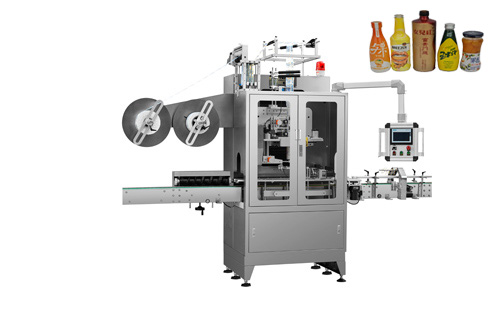
The primary driver for customizing shrink sleeve applicators is the need to accommodate irregular and complex bottle shapes, such as tapered personal care containers, angled beverage bottles, and squeezable pouches. Standard machines often struggle with these non-cylindrical forms, leading to wrinkles or misalignment. Customization involves engineering specialized mandrels, vacuum-assisted transfer systems, and servo-driven tension controls that can gently yet firmly guide sleeves onto intricate contours. Furthermore, as brands seek to maximize production efficiency, custom configurations must support high-speed throughput, often exceeding 30,000 bottles per hour. This requires the integration of high-frequency cutting mechanisms and synchronized conveyor systems that maintain micron-level precision even at blistering operational speeds.
Engineering for Next-Generation Sustainable Materials
The global packaging industry is undergoing a significant transition toward recyclable, bio-based, and mono-material films, such as PETG and PLA, which present unique processing challenges compared to traditional PVC. These newer substrates are often thinner (35–40 microns) and highly sensitive to thermal variations. Customizing a shrink sleeve machine for these materials necessitates the installation of advanced tension management systems to prevent stretching or tearing of the delicate film. Additionally, manufacturers must tailor the machine’s feeding and cutting modules to handle these lightweight gauges without compromising registration accuracy, ensuring that the shift toward sustainability does not come at the cost of production reliability or visual quality.
Precision Thermal Management and Multi-Zone Control
A critical aspect of customization lies in the heat shrink tunnel, as different film substrates demand distinct thermal profiles to achieve a seamless, wrinkle-free finish. For instance, while OPS materials may require temperatures between 90–120°C, PETG films perform best at 160–200°C. Even minor deviations can result in significant material waste and quality defects. Customized solutions address this by incorporating multi-zone heat tunnels with adaptive heating capabilities and real-time temperature monitoring. This allows operators to fine-tune the thermal environment for specific material combinations, ensuring uniform shrinkage across the entire bottle surface while optimizing energy consumption and reducing the carbon footprint of the packaging line.
Integrating Smart Automation and Modular Flexibility
Modern customization extends into the digital realm, leveraging Industry 4.0 technologies to create modular and adaptable packaging ecosystems. Custom shrink sleeve machines are increasingly equipped with IoT-enabled sensors and hyperspectral quality control cameras that can detect micron-level defects in real-time, reducing labeling error rates to under 0.3%. Furthermore, modular architectures allow for rapid changeovers and seamless integration with upstream filling and downstream inspection systems. By customizing machines with these smart, flexible capabilities, manufacturers can future-proof their operations, enabling them to pivot quickly between seasonal campaigns, limited-edition SKUs, and evolving regulatory requirements without extensive mechanical retooling.
 ∷
∷