Heat Shrink Sleeve Machine Drives Smart Packaging Flexibility
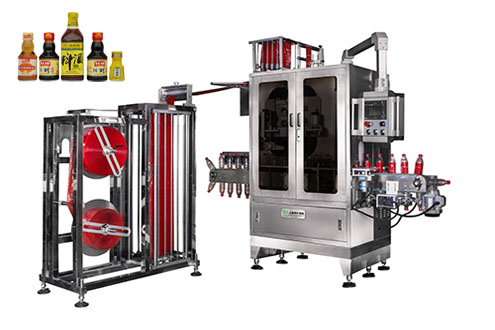
As brands increasingly adopt full-body labeling for premium presentation and regulatory compliance, the heat shrink sleeve machine has evolved from a simple finishing device into a dynamic, intelligence-driven system capable of handling today’s most complex packaging challenges. In 2026, innovation in this space centers not just on heat application but on adaptability, material science integration, and seamless line synchronization.
Unlike earlier models limited to uniform cylindrical containers, next-generation heat shrink sleeve machines now feature multi-axis servo control and real-time contour recognition. These systems adjust tunnel airflow and conveyor speed based on container geometry ensuring flawless shrinkage on tapered bottles, square jars with rounded corners, or even multi-chamber vessels used in cosmetics and pharmaceuticals.
A key advancement is the integration of “material-aware” thermal profiling. With sustainability driving adoption of alternative films—such as bio-based PLA, recycled PETG, and low-shrink rPET machines must deliver precise, tunable heat curves to avoid distortion or incomplete adhesion. Modern units store digital profiles for dozens of film types, automatically calibrating temperature zones and dwell time at the start of each job.
Energy efficiency has also taken center stage. New compact tunnel designs use targeted infrared emitters combined with recirculated hot air to reduce energy consumption by up to 35% compared to conventional convection systems. Some models even harvest waste heat for pre-warming incoming sleeves a subtle but impactful gain in high-throughput environments.
Connectivity further elevates performance. Through OPC UA or MQTT protocols, heat shrink sleeve machines now feed live data on cycle count, temperature stability, and fault logs into central production dashboards. This enables predictive maintenance and cross-line performance benchmarking turning a once-isolated station into an active node in Industry 4.0 ecosystems.
Crucially, safety and ergonomics are no longer afterthoughts. Enclosed tunnels with automatic cooldown sequences, noise-dampened blowers, and tool-less access panels support compliance with global workplace standards while reducing operator fatigue during frequent changeovers.
As packaging shifts toward personalization, serialization, and circularity, the heat shrink sleeve machine stands out not for its simplicity, but for its capacity to unify aesthetics, function, and operational intelligence in a single, responsive platform.
 ∷
∷