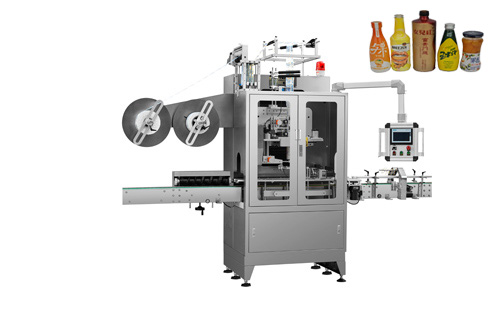
New Automatic Shrink Sleeve Applicator Machine
In today’s connected production environments, the automatic shrink sleeve applicator machine is transcending its traditional role as a standalone labeling unit, emerging instead as an intelligent node within broader industrial IoT (IIoT) architectures that prioritize data transparency, predictive upkeep, and operator synergy.
Modern facilities are no longer evaluating these machines solely on speed or accuracy. Instead, they’re assessing how well an automatic shrink sleeve applicator machine communicates with upstream fillers, downstream packers, and central MES (Manufacturing Execution Systems). Real-time data exchange on film tension, misfeed events, or sleeve registration drift now enables dynamic line adjustments, minimizing waste before defects occur.
Predictive Maintenance Redefines Uptime
Gone are the days of scheduled downtime based on hours run. Today’s advanced systems embed vibration sensors, temperature monitors, and motor load analyzers that feed into cloud-based analytics platforms. These tools detect early signs of bearing wear, belt slippage, or vacuum pump degradation, triggering maintenance alerts only when needed. The result? Uptime improvements of up to 20% in high-volume beverage and dairy operations.
Human–Machine Collaboration Enhances Safety
Rather than fully removing operators, next-generation machines are designed for collaborative interaction. Light curtains, proximity-aware servo stops, and intuitive touchscreen diagnostics allow technicians to safely intervene during jams or changeovers without full line shutdowns. This “assistive automation” model reduces injury risk while preserving human oversight, a critical balance in mixed-skill workforces.
Acoustic Engineering Meets Workplace Wellness
Noise pollution from high-speed applicators has long been a concern in dense production halls. New models now incorporate sound-dampening enclosures, low-resonance drive systems, and aerodynamic airflow paths to cut operational decibel levels by 10–15 dB. This isn’t just about comfort, it aligns with occupational health regulations in markets like Germany and Japan, where sustained noise above 80 dB requires mandatory hearing protection and monitoring.
Standardization Fuels Interoperability
As factories adopt multi-vendor equipment, demand is rising for automatic shrink sleeve applicator machines built on open communication protocols like OPC UA and MQTT. This standardization ensures seamless integration regardless of the PLC or robotics brand used elsewhere on the line, future-proofing investments in an era of flexible, scalable automation.
Looking Ahead
The trajectory is clear: the automatic shrink sleeve applicator machine is evolving from a mechanical device into a responsive, data-generating asset that contributes to holistic production intelligence. In smart factories of tomorrow, its value won’t just be measured in labels applied per minute, but in insights generated, risks anticipated, and workflows harmonized.
 ∷
∷