Daily Chemical Shrink Sleeve Applicator Setup Guide
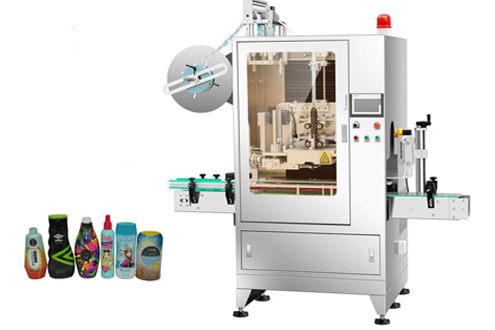
Daily chemical products cover a wide range of containers, from shampoo bottles and detergent jugs to cosmetic tubes and personal care jars. A daily chemical shrink sleeve applicator must therefore handle more variety than many beverage or food applications, because container shape, material and surface finish change frequently across product families.
Container geometry is a central challenge. Daily chemical bottles often combine a narrow neck, a wide shoulder and a contoured body, which requires the sleeve to shrink unevenly across different diameters. If the film shrink ratio, tunnel temperature zones and conveyor speed are not matched to the specific container profile, the result is usually wrinkles at the shoulder or loose coverage near the base.
Surface condition also affects label quality. Many daily chemical containers are made of HDPE, PET or laminated plastics with slightly textured or low-energy surfaces. Residual release agents, dust or moisture from washing can reduce sleeve adhesion during shrinking. Containers should reach the applicator clean and dry, and guide rails must support the bottle without marking or scratching the surface.
For buyers, testing should use actual production containers filled with real product, not empty samples. Evaluating label alignment, shrink uniformity, edge lifting, and changeover time under normal line conditions gives a more accurate picture of performance. When the applicator is matched to the specific daily chemical container range, it supports consistent branding and reliable output across the full product portfolio.
 ∷